BMT: Aplastic (Day +11)

Clark continues to eat and drink in great quantities, and isn’t showing any signs of mucisitis.  His numbers are at rock bottom and he is susceptible to just about anything, so we are just very lucky that he is in great spirits, eating, and not losing any hair!  In fact, his weight just returned to his admittance weight.  Go Clark!

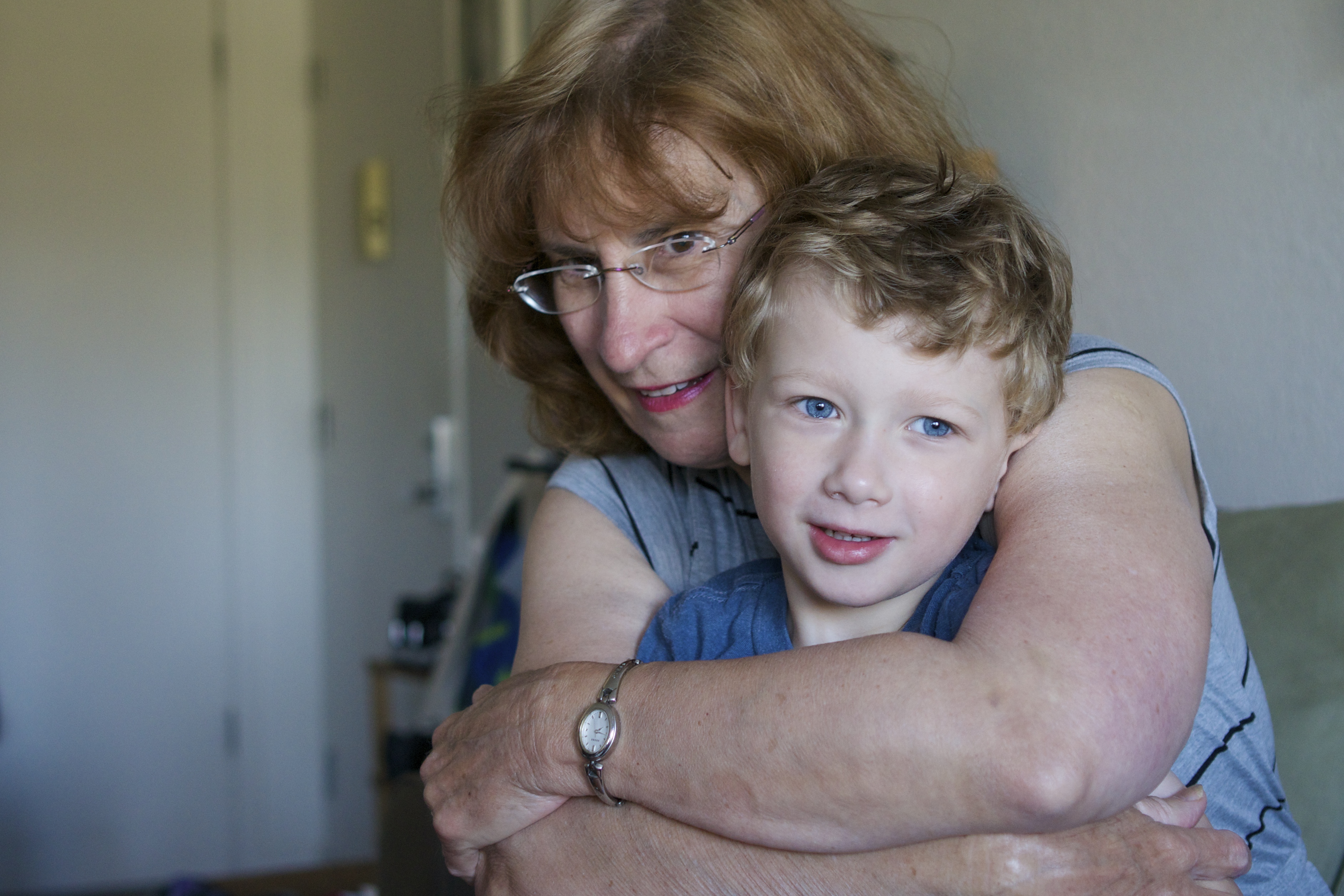
Clark had a fun day with Grandmom and Daddy today.  Grandmom came out to see Clark while Connor spent the day with Beth.  Clark played on the bed, work on puzzles and had books read to him.  He was delighted to have a change of pace and someone new to play with.

IMG_0026Beth and Connor spent some extra special time together today.  The UCSF Benihoff Children’s hospital is 3 blocks from Golden Gate park.  And it is only a 20 minute walk to a lot of the attractions for kids that are in the park.

Today, Connor got to ride on the Carousel, and visit the California Academy of Science.

The Academy is a “hands-on” museum with tons of exhibits for all ages.  They have some pretty cool attractions.  One of cooler ones is the “shake house“!  This is a simulator that lets you feel what 2 historical earthquakes feel like.  The two earthquakes it simulates are the 1989 Loma Prieta (6.9 on the Richter scale), and the great San Francisco earthquake of 1906 (7.9 on the Richter scale).   After our 6.0 Earthquake in Napa Valley a week ago, Connor has been very interested in earthquakes.

This visit to the Academy was especially exciting for Connor.  He has been persistently asking his Mom and Dad for an opportunity to see dinosaur bones.  Sure enough, as soon as they walked in the door, what to Connor’s wondering eyes should appear?

Dinosaur bones!!
Dinosaur bones!!

A full size tyrannosaurs Rex skeleton!  His facial expression says it all:

Happiest.
Boy.
On.
Earth.

Project Steady-Track

Knowing that Clark had a long, long, looooong time to spend in his crib in the hospital, Connor, Grandmom and I set out to create a portable wooden train track that Clark could easily use in his crib or on the floor. The goal was to create a track that was easily portable, would work on any surface, and was also fixed so the track wouldn’t come apart.

We started with a simple loop, and if we had success with that, we decided we would look at creating slightly larger and more interesting designs.

I went down to home depot, and found a 1/4 inch plywood board that we cut down to 18.5 inches square. We had taken some measurements and knew this would fit a standard wooden train loop perfectly.

Connor genuinely loved painting the board for Clark.

Grandmom and Connor then painted the front and back of the board with emerald green semi-gloss paint.  We chose a water-based paint with a semi-gloss finish as this seemed the least toxic and the most resilient to cleaning with bleach cloths.

At this point, the board has been finished gluing and the clamps are holding the track in place until it dries.

Before gluing, we placed the loop on the board and used clamps to hold the layout in place.  This ensured the loop was centered and connected properly. We then went around the loop gluing one piece at a time.  After giving the glued track 24 hours to dry, we applied silicone grouting around all the edges of the track and between each of the track segments.  The goal here was to seal the cracks to avoid trapping liquid from water or food.  Again, making it easy to keep clean and keep bacteria free!

Even though the paint dried in an hour or two, we gave the board a couple days to have the paint cure before giving it to Clark.  This was a little precautionary due to the possibility of fumes continuing to come from the paint and also to ensure the board was cured enough to be wiped down with bleach cloths.  It would be a disaster if we wiped the board down and the paint came off!!

Connor laboriously tests the track to ensure it worked well for Clark.

Then the most important part.  Connor was tasked with testing the quality of the loop to ensure the trains ran smoothly around the track.  He ran 3 different engines around the track, both forward and reverse, and then physically turned the trains around, and proceeded to test again both forward and reverse motion.  This testing regime was all his idea, and he insisted on it even after I suggested he had done enough.  Needless to say, I was extremely impressed with his thoroughness.

When I finally brought the track in for Clark, his reaction was unbridled excitement and energy.  Upon getting the board, he immediately starting pointing and grunting, effectively asking for the trains that accompany the track.  He then proceeded to play with it for the next couple hours straight.  Laughter and good times ensued.

I think we can call this a success.  Enjoy the train track, Clark!  Daddy, Connor and  Grandmom love you!

Thank you! Thank you! A million times – thank you!

We are following a blog about another young Canadian girl (Nadia) who is afflicted with DKC that is also having to go through blood, platelet, and bone marrow transplants. While reading about Nadia (nadiasquest.ca), I noticed that her parents thanked their donors every time they received blood, platelets, etc…  This enthusiasm to continuously thank the donation community really struck a cord with me.  Why hadn’t Beth and I been so generous in our thanks for these donations?  We certainly are very grateful!

In thinking this over, it occurred to me that in the current healthcare system, there is massive disconnect between those who give and those who receive.  This is done to provide security and privacy for both the givers and the receivers.  On a day-to-day basis, it is very hard to recognize that the blood or platelets being given to Clark are from a real human being (that took time out of their day to draw blood or platelets) and from an organization dedicated to collecting, testing and treating the product once they get it.  It’s a massive engine of activity to get product for Clark that appears to simply come from a closet in the back of the hospital.

So, having been reminded of this, I wanted to issue some long overdue thank yous.

First and foremost, to the blood and platelet donors.  Thank you very much for taking time out of your busy day to make it to a clinic and donate.  Clark would not have survived this long without your help.  Your effort, has literally, saved the life of our young boy.  Thank you!!!

Secondly, to our bone marrow donor (currently only known to us as a “European” donor).  Thank you so much for being willing to go through the process and procedures required to give bone marrow.  We are very aware how disruptive, time consuming, and (in some cases) how painful it can be to give bone marrow.  Thank you so very much for your willingness to go through this procedure.  You are saving the length and quality of life for our young boy.  He would not be able to live and thrive without you.  Thank you!!

Third, to our doctors and nursing staff who literally number somewhere between 40-50 people.  To the doctors who have been patient with our questions and diligent on finding the correct diagnosis, thank you!!  To the nurses who have made our hospital stays comfortable and have been patient with all the questions and needs of both of our sons, thank you so very much!!

Fourth, to my mother.  Thank you for being willing to put your life on hold while Beth and I go through this painful process.  Without you, Beth and I wouldn’t be able to survive as a couple.  You have made it possible to both spend time with one another, and spend time with Clark and Connor.  We would not have been able to get this far (much less through the coming BMT) without you.  Thank you so much!!

Fifth, to Connor.  I know times are tough right now, and you don’t get to see mom and dad as much as you used to.  We are so sorry that we don’t get to see you while we are in the hospital with Clark, but your positive attitude and willingness to work with the current situation is very impressive to us.  Thank you for never complaining about mom and dad having to leave, and thank you for being so overjoyed to see us when we are able to make it home.  We love you so much, and will do our very best to make it up to you the best we can.  Thank you!!

Finally, to our extended friends and family who have given us financial and emotional support.  Beth and I could never have imagined life taking a turn like this, and we continue to be amazed at the outpouring of support and willingness to jump in and help.  And we can use all of it.  Thank you so much for all your help and your kind and positive thoughts!!

DSC07005
Thank you!!

While we expect to have a steady stream of very specific appreciations as this process goes forward, it will be impossible to thank everyone, so know these efforts are far from exhaustive.

And just in case – thank you to anyone we may have missed!! Clark as well as Beth and I, are eternally grateful to everything you have done.

Let’s see, 2 divided by 3 equals?

Clark’s doctor made a funny comment the other day.  When we were talking about the bone marrow transplant process, she mentioned that one of us would need to join Clark in isolation when he is getting his bone marrow transplant. So I asked how parents putting a child through a BMT typically cope with 2 children.  She then said that siblings would not be allowed in isolation (due to the risk of viruses and bacteria), and that most parents simply divide the responsibilities and each take a child.

This prompted me to ask a simple but important question: who in the family goes to work in this scenario?

She looked stunned for a moment, and then recovered and asked if we had a family member that could watch our older son during the day.  I replied that we have no family living in the state.  She then asked if we had a nanny or daycare.  No to both; Beth is a stay at home mom, which is how we survive on one income.

This apparently was too much for her.  She said that many families go through this, and they somehow “manage”, and that we would be fine.

I assume by “manage”, she means “go bankrupt”, as medical expenses are the single leading cause of bankruptcy filings in the US.  While I would gladly take the role of watching my 3 year old son full time, someone has to go to work and keep the medical insurance current.  The costs with medical insurance are surprisingly high – I can’t imagine going through this without insurance.

But what was really surprising, is the disconnect between those providing medical insurance, and the individuals receiving this insurance.  Even car insurance has become smart enough to realize that when your current car is out of service, you may need to be covered for a loaner car – and hence they provide a mechanism to pay for this.

When it comes to medical insurance, if the parent responsible for watching your children isn’t available – you are on your own.  I almost wonder if the people who come up with this coverage all have nannies and full time daycare, and never think that there would be a scenario where a parent might stay home and watch multiple children.  It’s clear the medical industry doesn’t have a clue about this.  Even our “assigned” medical insurance social worker was at a loss.

In the end we have been pointed to a website that allows us to hire a caretaker for our oldest boy.  Daycare isn’t an option, as we can’t have Connor exposed to sickness, unless we want to keep the boys separated for 8-12 months.  Costs for a nanny would be in the neighborhood of $3200 a month.  Can you imagine paying this out of the current budget you have?  We can’t.

It is clear the system is very broken.  I’m sure every parent who goes through this type of situation probably thinks the same.  But until you do go through this, there is no way to conceive of what a real medical emergency looks like.

And I suspect this is why the system remains broken.

Revelations on being a parent

I was suddenly struck with a revelation when thinking about Clark’s condition the other day.

When my wife and I decided to become parents, we thought we knew what we were signing up for. We take on the responsibility of raising the children, and if we do a good job, they move out and become responsible adults. 18-25 years, and we would be free to resume our intimacy and privacy.

In Clark’s case, it suddenly struck me that – beyond our best efforts – he might be unable to be an independent adult. That my wife and I may have unwittingly signed up for a life long commitment.

Which made me wonder…

In this day of knowledge, medicine, and (somewhat) economic stability – have we lost touch with the real responsibility of choosing to become parents??

Did parents of decades ago choose to have 5+ children, knowing that some of them may need the help of their siblings? Would couples in today’s age have only 1-2 children, if the odds of a life long debilitating disease was a “high” likelihood?

Would you think twice about having children faced with a possibility of something like this?

I look into Clark’s eyes, and I know the answer in my case. He gives it to me in one very large, and very loving, smile. I’ve chosen my path, and will remain steady through good and bad. Having seen the love in Clark, I know I would have regretted any other path that would have avoided such loveliness in my life.

Is a helmet for a mild hemophiliac worth it?

We debated for more than 6 months before realizing a helmet would be necessary for Clark. At first, we did not really believe that Clark needed a helmet, since he only had mild hemophilia.  But after 2 back-to-back visits to the ER for mild head bumps, we realized any prevention is much better than any trip to the hospital.

So off to buy a helmet.  The only problem was finding a helmet that provided enough protection, and yet didn’t look too much like a medical device.

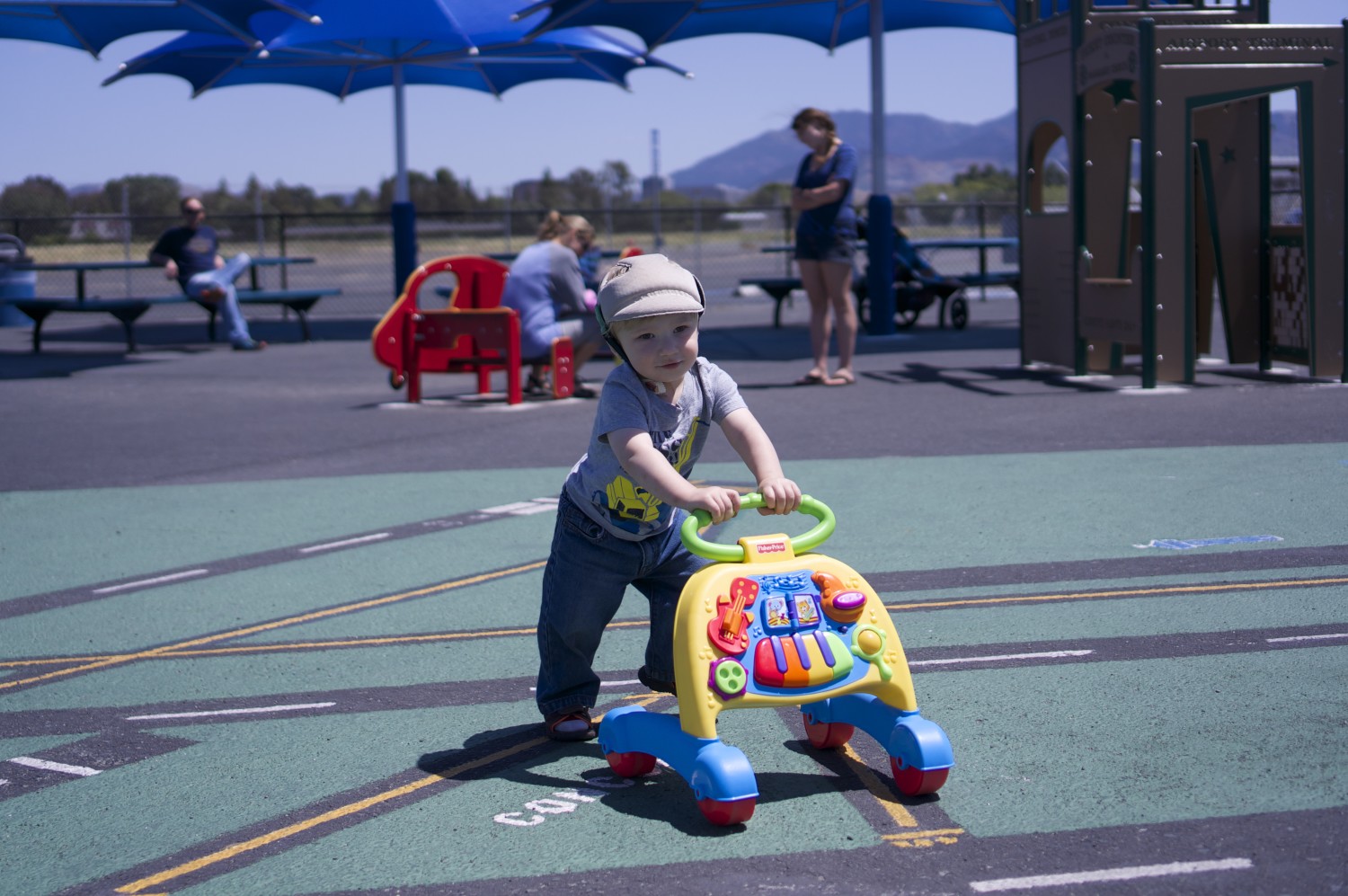
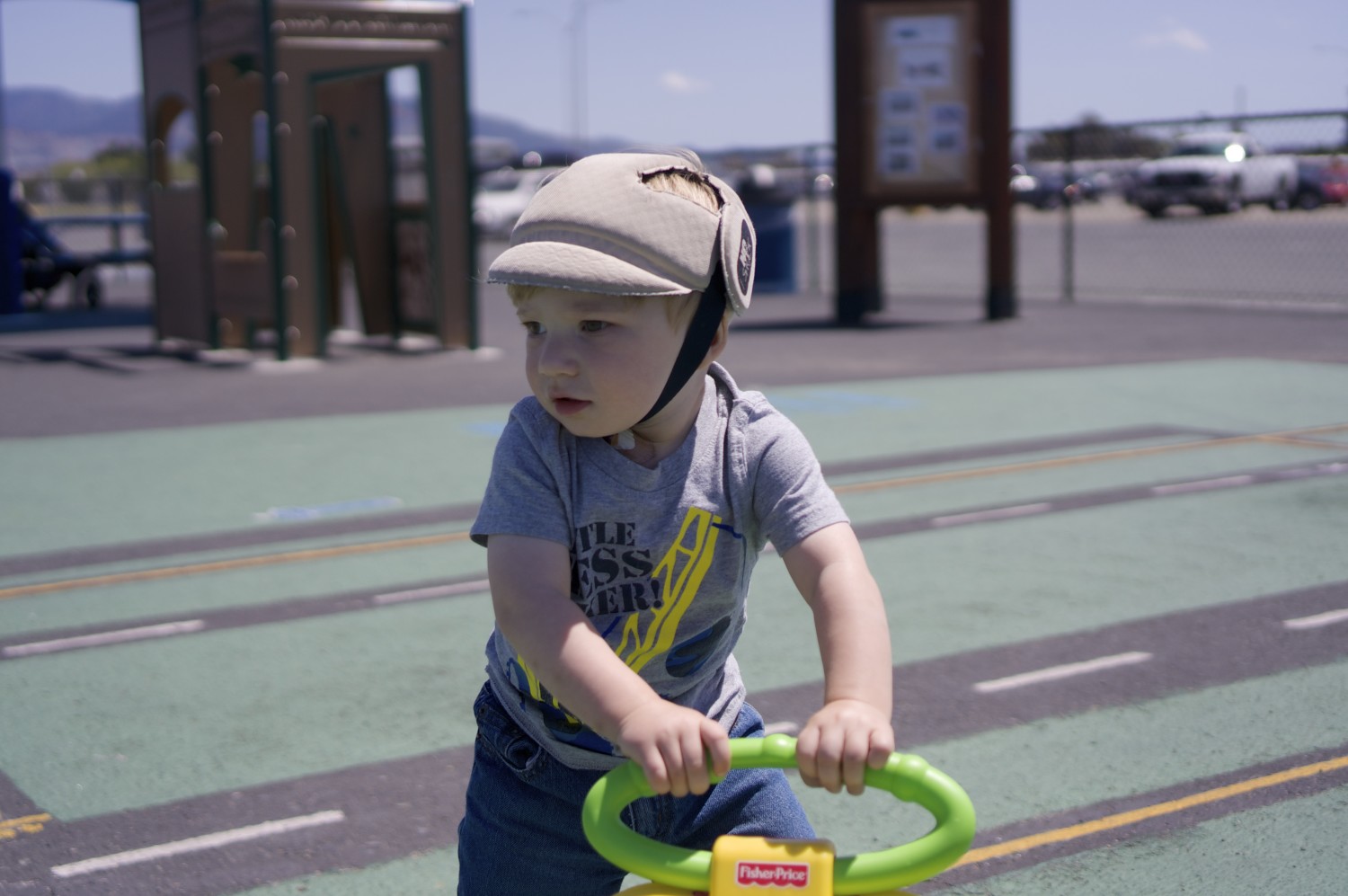
After looking at some terrible helmets, we came across the “No Shock”.  It’s a soft, adjustable helmet that looks more like an equestrian hat. It was one of the cutest helmets we could find that actually looked like a childs hat. It also has open spots on top to make it more breathable. A breathable helmet is more comfortable on a hot day in California.

We ended up buying the “No Shock” on Amazon.com.  It has turned out to be a fantastic helmet, and we’re looking at getting a second.  Easy to wear and size, and very versatile.  In this case, sometimes less is more, and the lack of cartoon characters makes it seem like we are simply overprotective parents, rather than carting around a child with a debilitating illness.

Nosebleeds: How something so simple, is now… complicated

When Clark’s older brother got a nosebleed, we quickly calmed him down, pinched his nose and tilted his head forward.  The bleeding usually stopped within a minute and we would then dust him off, and send him out into harms way again.

With our second child, Clark, it is amazing how different this simple injury has changed for us.

Clark woke up the other day with bloody sheets and a nose slowly oozing red. There are lots of reasons he might have a nosebleed:

  • banging his head accidentally when he was sleeping
  • itching his nose
  • dry summer air
  • etc…

As well, of course, spontaneous nose and/ or gum bleeds from his Aplastic Anemia.  Low platelets is one example of something that might cause this.

Nosebleeds can also be difficult for someone with hemophilia since it is difficult to stop the bleeding.  Couple this with low platelets, and we figured we were just seeing a little more active bleed than normal.

Clark was scheduled to get his platelets that day, so at first we weren’t concerned at all.  Our first thought was: get him his regular platelet transfusion, and it should help stop the bleed.  Clark received the platelets, and all was looking well. He had a little more color in his cheeks, and the bleeding has stopped.

Until the drive home. :(

When I arrived home and took Clark out of his carseat, I noticed that his nose had started bleeding again and blood was all over his face. I immediately gave him a dose of Amicar knowing that this drug helps to prevent saliva/ mucous from breaking down a clot. Unfortunately, an hour later and his nose was still bleeding. A quick call to the hematologist has us trying to squeeze Clark’s nose shut for 15 minutes. (This, let me tell you, Clark did not like!  I think he may never let us touch his nose again.)

Squeezing didn’t help either.  So I ended up driving back to the clinic for Clark to get an infusion of Factor VIII, hoping this might be the issue.  (Factor VIII gives him the clotting factor that hemophiliacs are missing.)  While at the clinic getting the factor treatment, we did another CBC.

This is where things got interesting.

It turns out Clark’s hemoglobin (red blood cells) were low.  He was at 6.7 and the doctors like to transfuse at 7 or less (normal healthy people are closer to 10).

At the time, my first thought was what would this have to do with it?  Red blood cells aren’t used for clotting.  When you are low on red blood cells, you are getting less oxygen (carried by red blood cells) to your organs, which can manifest itself in a child being lethargic.   No signs of that with Clark at this point.

But what we didn’t think about, was the fact that while Clark’s energy appeared normal, he was maintaining this energy by having his heart work twice as hard to get oxygen around his body.  Which means his blood pressure was also elevated.  As such, his nose wasn’t able to heal due to the pressure of his blood circulating around his body.  Think of it this way, if you had a bloody nose, and then started to sprint as hard as you could – would your nose heal?  No, it would probably start to gush.  This was effectively what was happening to him.

Sure enough, once he got his blood transfusion, his nose stopped bleeding altogether, and he (and I) could finally calm down and relax.  Once again proving, that with a Hemophiliac / Aplastic Anemia child, even the simplest of issues can cause huge problems.

6 days in pediatric care

On April 22, our doctors came to us more bad news (a recurring theme in this whole fiasco).

If the doctors aren’t sure that you have Aplastic Anemia, but are pretty sure the CBC blood counts you have are from this disease, they might continue to test your bone marrow until the disease “declares itself”.  Bone marrow declares itself when the cellularity of the marrow is less than 10%.

From the continuing declining numbers in Clark’s blood counts, we would need to do another bone marrow biopsy, as well as platelet and blood transfusions to ensure Clark’s survival. They were still certain that Leukemia had been ruled out, but wanted to check to see if Aplastic Anemia was going to declare itself.

Up to this point, even an attempt to pull blood had been extremely difficult.  Our last time we tried to put an IV in Clark, we had a horrible 20 hour stay in ER and still didn’t get it in.

So we had to make a decision.  The stress of attempting to find veins in Clark was physically and psychologically damaging.  And if he needed an IV for a bone marrow biopsy, plus transfusions twice a week, plus pulling blood samples twice a week, plus (possibly) chemo therapy… We needed a better solution.

So we asked our doctors to implant a Broviac.  You can read more about the device here. By placing this “central line” inside Clark, doctors could easily give or take liquids, without the use of needles.

So in 1 days notice, we packed everyone up, and went for an extended stay in Kaiser’s Oakland pediatric facility. We arrived late in the evening to “check-in” and give us “in patient” status. This allowed us to start Clark’s surgery 1st thing in the morning.

Clarkie’s room had a crib, fold out couch, a private bathroom and a ton of medical equipment. This was a very cozy (as in, tiny) room for 4 of us to spend the week. We were able to ask for a hospital bed instead of a crib. This allowed Patrick and Clark to shared the bed, while Connor and I slept on the couch.

The morning of the 25th, Clark went in for surgery. Factor VIII was given before and after the surgery. They performed the marrow biopsy, and then the broviac insertion, followed by platelet transfusion and more factor. The surgery went well with no bleeding issues and the broviac was able to be used immediately.

The hospital stay lasted 6 days (4 people, small room). Clark received factor treatment 9 more times during the visit. Not because of any bleeding, but evenly spread out as a precautionary treatment. During our stay, we received training on how to care for his broviac and to wait for his test results to come back.

Sure enough, this time Clark was diagnosed with Severe Aplastic Anemia. He has a 5% cell growth. 10% is considered Aplastic Anemia. Clark is now being tested for multiple genetic links to Aplastic Amemia (approximately a 10% chance), as that may change the course of treatment. Patrick, Connor and myself were tested to see if we are a bone marrow match. The results will be available in a couple weeks.  Connor stands the best chance of being a possible donor.